
High-Impact School Wellbeing Strategies
Science-based approaches for classrooms and staffrooms
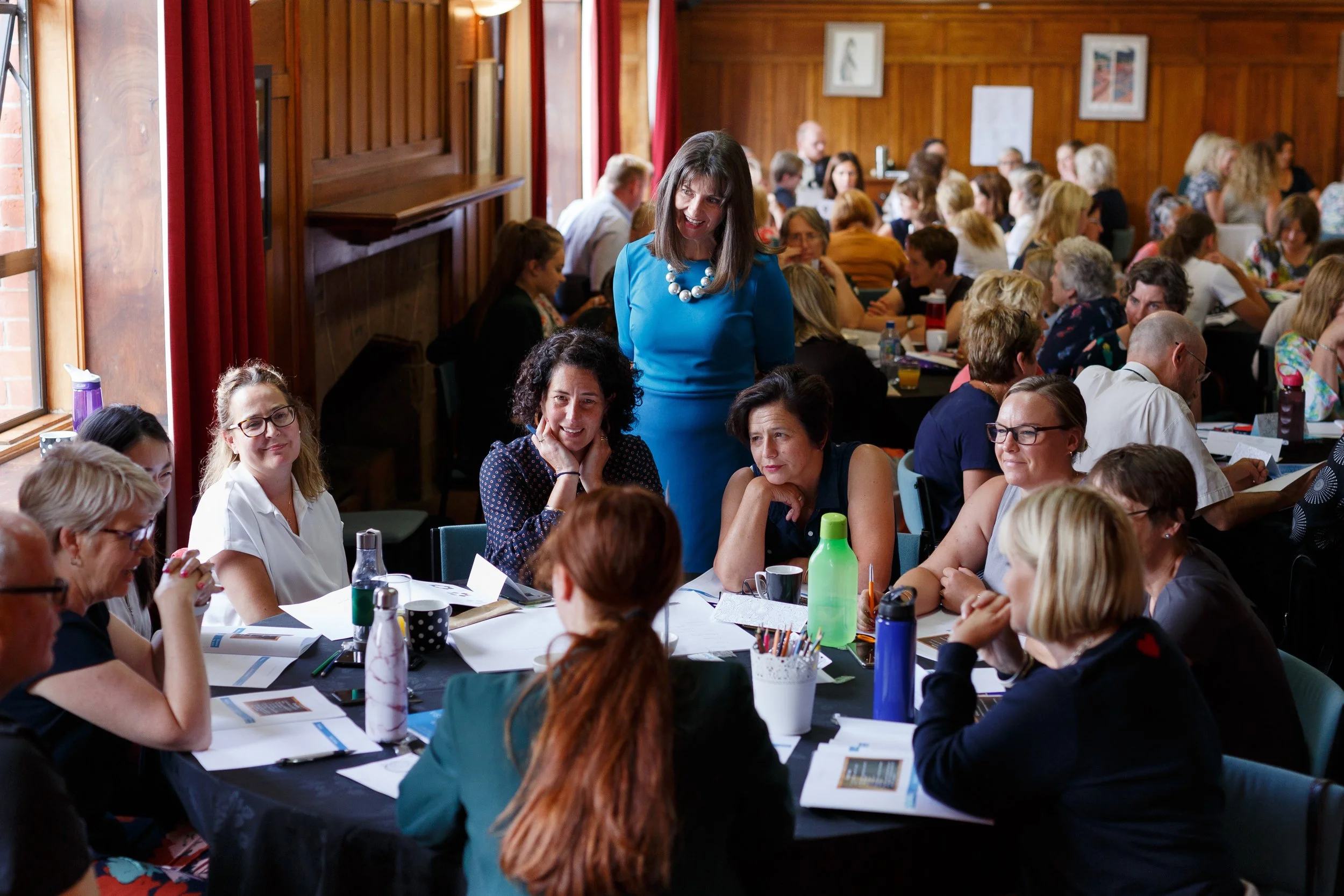
Visible Wellbeing was created by Professor Lea Waters AM, PhD, bringing 20+ years of published research in positive psychology, education, and organisational psychology into a practical approach schools can live, not just learn about.
Most wellbeing initiatives stay abstract - a poster on a wall, a single lesson, a policy no one quite remembers.
Visible Wellbeing takes a different approach.
Built on Professor Waters' large-scale bibliometric analysis of over 18,000 journal articles, VWB distils decades of research into the SEARCH framework - six practical pathways that help students, teachers, and staff move wellbeing from something felt privately to something seen, shared, and built together.
It's not a pre-set curriculum. It's a set of flexible, evidence-based practices that work across early learning, primary, and secondary schools - for staff as much as for students.
The Framework - SEARCH
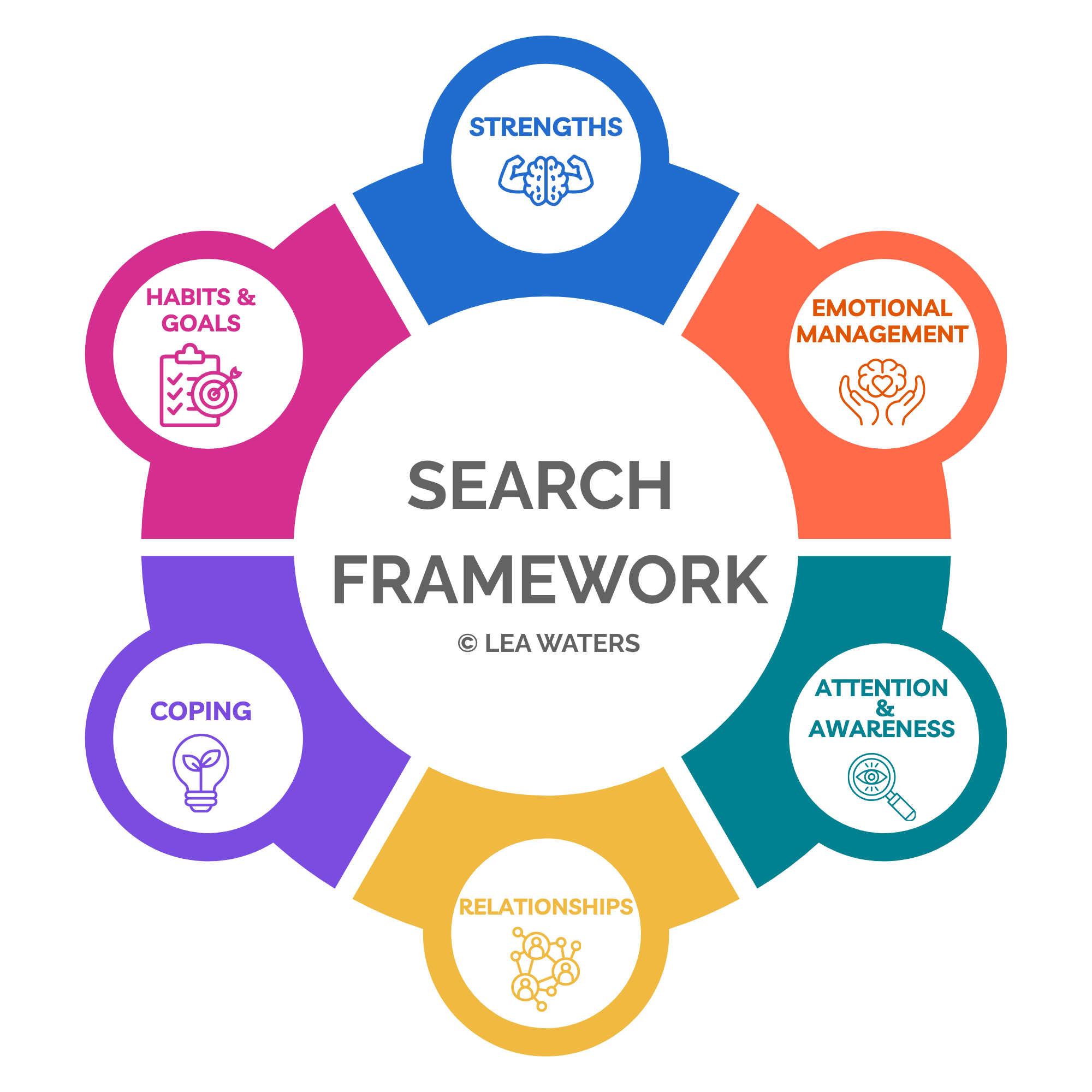
Six Pathways to Wellbeing
The SEARCH wellbeing framework identified the following six pathways to wellbeing:
Strengths: Recognising and building on what's already working
Emotional Management: Understanding and regulating emotion
Attention & Awareness: Building focus and presence
Relationships: Strengthening connection and belonging
Coping: Developing resilience, even in the face of adversity
Habits & Goals: Turning big aspirations into small, achievable actions
These pathways were identified via a rigorous research process and were found to be effective conduits to wellbeing in both student and adult populations.
The SEARCH framework sits at the heart of the Visible Wellbeing approach and has since been evaluated through further action research in schools, a systematic review involving nearly 36,000 students, and longitudinal studies.
It has been the subject of 12 published papers and an independent evaluation by Villanova University (USA), with results showing improvements in student efficacy, stress management, compassion, and focus, alongside a shared wellbeing language across school communities.
Developed by Professor Lea Waters
Professor Lea Waters AM, PhD is an Australian academic, psychologist, author, and speaker with a PhD in Organisational Psychology, and is recognised globally as an expert in school psychology and parenting.
She is the Founding Director of the Centre for Wellbeing Science at the University of Melbourne, where she has held an academic position for over two decades, and sits on the Science Board of UC Berkeley's Greater Good Science Center.
In 2020, Lea was named a Member of the Order of Australia (AM) for her contribution to psychology, education, and the mental health sector. She has published 110+ scientific papers and is a Past President of the International Positive Psychology Association. Her work has featured in The Wall Street Journal, TIME, The Atlantic, The Guardian, and The New York Times.
Lea is the creator of Visible Wellbeing and author of the bestselling parenting book The Strength Switch.
Global Pioneer in Postive Education
As a speaker, Lea offers her audience a unique blend of science and practice. From the United States to Uganda, Lea’s expertise and personable nature has resonated all over the world. Check out Lea in action here:
Constantly Evaluated for Impact
Visible Wellbeing isn’t just informed by science, it has real world impact.
In these examples, students were asked to define wellbeing.
Prior to this school engaging in Visible Wellbeing, 86% of students gave a very generic answer or said, “I don’t know”.
After engaging with Visible Wellbeing, generic answers dropped to 30%.
Almost 70% of students were able to clearly articulate and define what wellbeing was and link their definitions to the SEARCH Wellbeing Framework with examples.
The demonstrates the way in which Visible Wellbeing fosters wellbeing literacy - that is, having the vocabulary to clearly define wellbeing.
Wellbeing literacy is one of the biggest predictors of student wellbeing because students it is difficult for students to experience wellbeing if they cant conceptualise.
This is just one small example of how schools can make wellbeing visible; by providing everyone with a shared and actionable working definition and language of wellbeing via the SEARCH Framework.
It’s also a small example of a research-backed outcome your school community can expect to experience when they become a Visible Wellbeing school.
In addition to an increase in wellbeing literacy, findings from schools who have implemented Visible Wellbeing include:
Better stress management
Increase in student efficacy
Increases in compassion
Higher use of strengths
More focused students
Common whole-school language and approach
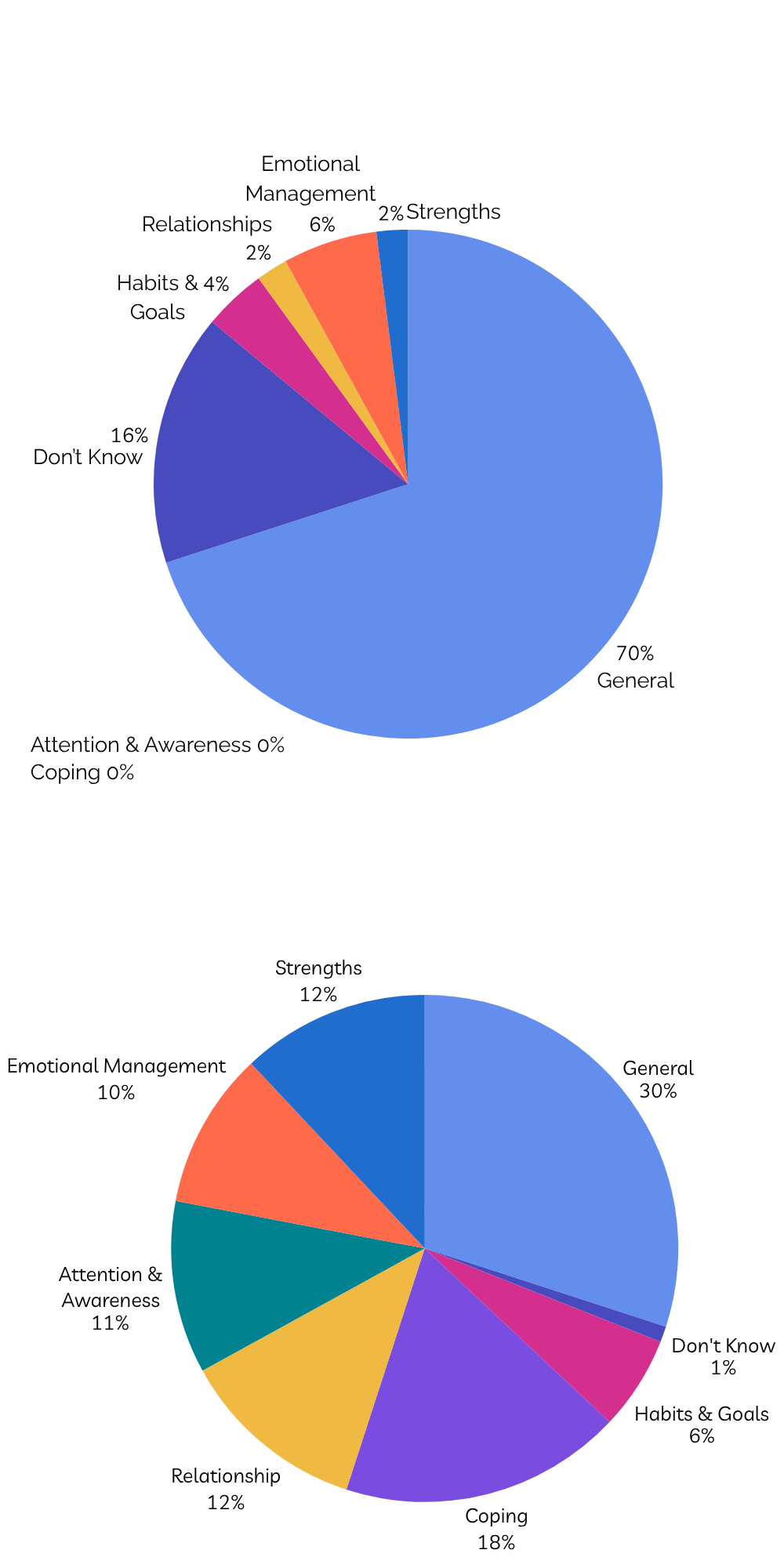
Pie charts show the percentage of student answers coded in; SEARCH Pathways, ‘general’ and ‘I don’t know’ before and after the Visible Wellbeing training program (Waters & Higgins, 2022).
Recognised and Trusted
Visible Wellbeing is featured on the School Mental Health Fund Menu (Department of Education and Training, Victoria), the Be You Program Directory (Beyond Blue), the ACER Wellbeing Program Guide, the External Wellbeing Programs Directory (Department of Education and Training South Australia), approved by NESA (NSW), and shortlisted for the global Reimagine Education Awards.
Our free resources have been used in over 100 countries, with Partner schools across Australia, the United States, Canada, the Netherlands, Belgium, India, Hong Kong, the United Arab Emirates, New Zealand and South Africa.

Delivered by a Team of Qualified Facilitators
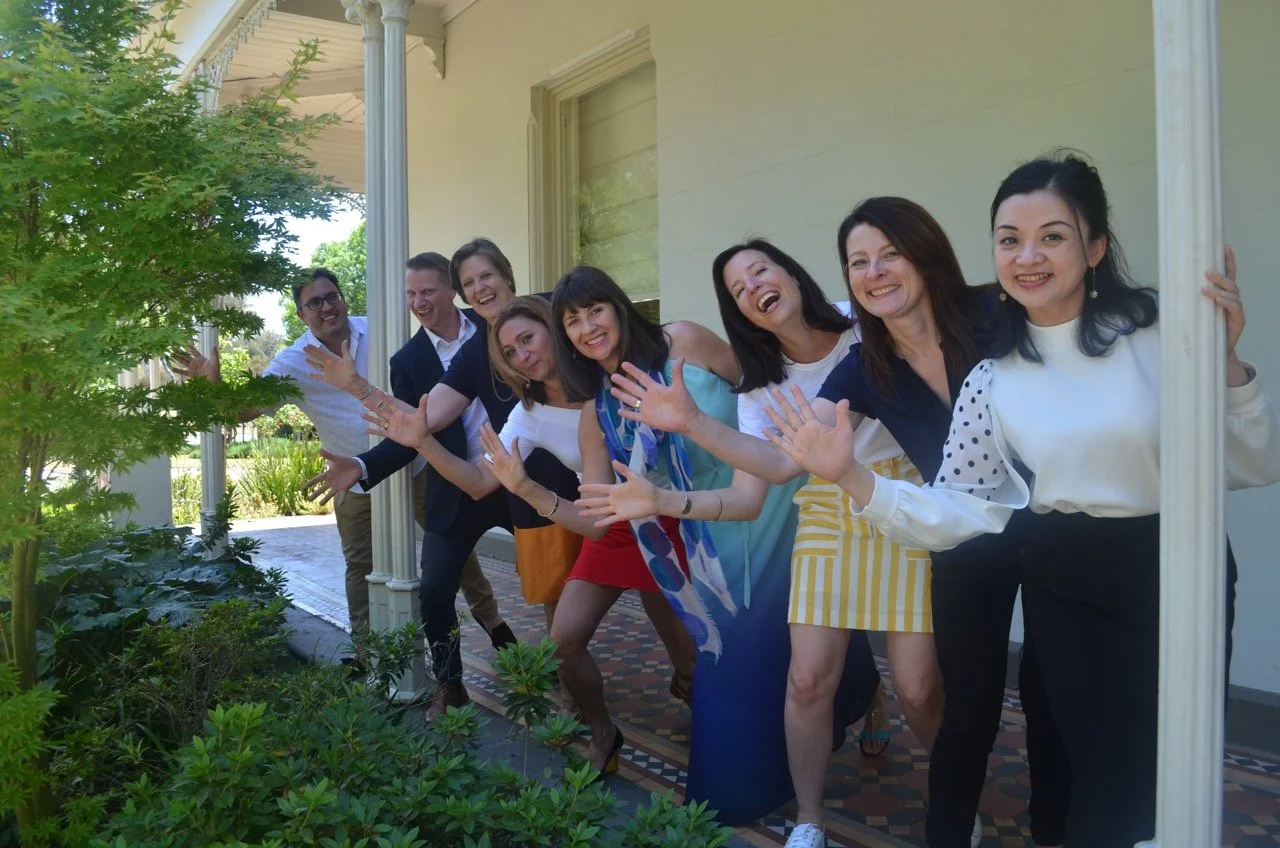
Our facilitators are personally selected by Professor Lea Waters for their expertise in teaching and/or psychology, and their passion for helping schools put the SEARCH framework into practice.
See Which Path is Right for Your School
Whether you're wanting a one-off workshop or a whole-school program, we're happy to talk through what fits your school best.